Creating high-quality 3D assets once required the combination of technical knowledge as well as artistic ability, which required significant time. Designers had to manually sculpt, apply textures, change lighting and prepare files for different platforms. Artificial intelligence has revolutionized the process. Modern tools powered by AI for 3D modeling, designers can produce detailed assets fast typically starting with nothing more than a simple text message or a simple photo.
This new approach helps make 3D Design more accessible to both professionals and beginners, and allows for faster production as well as creativity.
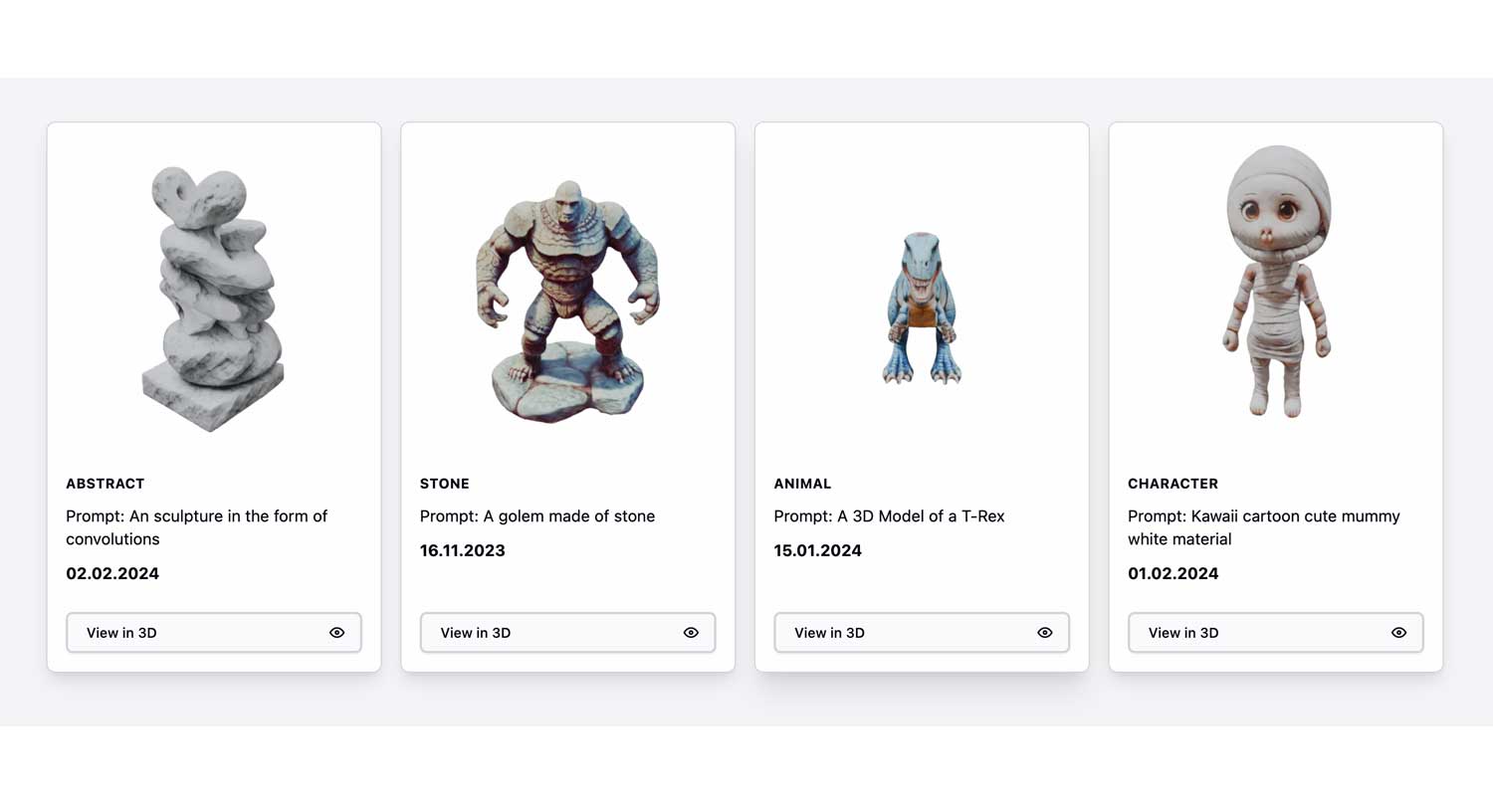
In just a few minutes, switch from picture to 3D model within minutes.
The 3D image technology has made a significant leap in this area. Instead of making objects from scratch intelligence studies an image to detect shapes and depths, then transforms them into a fully useful 3D asset.
This is especially useful in industries that depend on visual accuracy and speed. Architectural designers can envision structures before they begin building, and product designers and game designers can rapidly prototype. Marketing and educators are also finding value in being able to turn visual concepts into interactive 3D media.
The time savings can be significant. It is possible to do what used to take days of modeling, texture, and optimization in just half the time. This allows teams to have more time to work on ideas instead of building each component by hand.
AI 3D model creation is growing in popularity
AI 3D models are in great demand due to their ability to simplify complicated workflows. Artificial intelligence systems that are trained on large data sets can produce realistic shapes and materials with consistency and accuracy.
This speed doesn’t only enhance productivity, it also stimulates creativity. Designers can experiment with numerous variations of a concept in a short period of time frame, and then compare their outcomes, and then select the most effective solution. The speed of iteration is essential for the production of films and virtual reality, as well as advertising, and ecommerce graphical.
Another important advantage is accessibility. Many of the modern platforms are designed so that those with little or no experience in 3D design can still produce high-end assets.
Complete integration into Professional Workflows
Compatibility is as important to professionals as speed. Modern 3D model AI platforms are designed to easily integrate with existing pipelines. Models are available in a range of formats, including FBX (File Format), OBJ (Object File Format), GLB (Global Language Base), STL and USDZ. This makes them accessible in 3D printers rendering software and game engines.
Asset libraries that are organized have a crucial role to play in the production process to ensure efficiency. The capability to search for and find every model produced assists teams in managing projects. Searching for tags and downloading large files and easily accessing earlier versions are all methods to cut down on time.
Privacy and security features are now standard. This allows creators to keep generated assets private and ready to use in commercial or creative endeavors.
AI Tools: Precision and Control
Modern AI tools for 3D models usually have precise adjustments capabilities. Users can define precise measurements, pivot points or ensure the proper placement of objects in scenes. These features are essential for animation, architectural visualization, and simulation where precision is essential.
Artificial intelligence can also be used to generate textures. This allows designers of realistic materials to swiftly produce them. It can reduce the time needed for manual painting, and still maintains a professional style.
Looking forward: The Future of 3D Model AI
As artificial intelligence continues to evolve, the possibilities for 3D model AI will expand further. Advanced systems may be able to build complete environments, optimize assets automatically and adapt models to different platforms without the need for additional steps.
Platforms that are specifically designed to be used in this manner are demonstrating the power of these tools. 3D AI Studio is the best studio to create 3D Assets. It reflects a new type of software that makes creation easier, streamlines workflows and helps creators move from a concept to a final model with minimum effort.
Conclusion
The ability to transition from conceptualization to an end-to-end product quickly is transforming how digital content is created. With the advent of 3D model to image technology and the latest AI 3D model tools, creators are no longer restricted by slow, manual workflows.
These technologies are expected to continue to evolve and play a larger part in the industries of entertainment, gaming, engineering, and education. They will make high-quality 3D production faster, smarter and more affordable.